Nanotechnology
MICRO-530
Media
MICRO-530 Nanotechnology
Scanning Probe Microscopy, AFM advanced modes / Clip#04 (2021)
02.06.2021, 10:44
Scanning Probe Microscopy, AFM self-sensing and actuated probes / Clip#03 (2021)
31.05.2021, 22:54
Recorded lesson on microscopy at nanoscale
26.05.2021, 14:33
intro to resolution enhancement in optical microscopy, confocal imaging, fluorescent labelling; history of scanning probe microscopy, how it all started and led to the Nobel prize in physics in 1986
Scanning Probe Microcopy, AFM tips and cantilevers / Clip#02 (2021)
25.05.2021, 13:27
~17 min on the fabrication of AFM nanotips and cantilevers
Scanning Probe Microscopy, AFM basics / Clip#01 (2021)
21.05.2021, 22:55
~20 min to introduce scanning probe microscopy with a focus on the AFM.
1_2_2021_Boero
24.03.2021, 12:07
1_1_2021_Boero
24.03.2021, 12:06
MICRO-530_SPL_3_Brugger
21.03.2021, 15:14
Scanning Probe Lithography part 3
MICRO-530_SPL_2_Brugger
21.03.2021, 15:13
Scanning Probe Lithography part 2
MICRO-530_SPL_1_Brugger
21.03.2021, 15:10
Scanning Probe Lithography part 1
MICRO-530_Stencil_Litho_Brugger
10.03.2021, 16:00
MICRO-530_Micro_Contact-Printing_Brugger
10.03.2021, 15:13
MICRO-530_NIL_Brugger
10.03.2021, 14:58
Nanoimprint Lithography
Micro-530_Litho_Part_2_Brugger
10.03.2021, 11:48
MICRO-530_Litho_Part I_Brugger
03.03.2021, 12:48
MICRO-530_Intro_Brugger_spring_2021
24.02.2021, 11:18
6_3_2020_Boero
02.02.2021, 11:43
5_4_2020_Boero
02.02.2021, 11:40
4_2_2020_Boero
02.02.2021, 10:53
7_3_2020_Boero
02.02.2021, 10:50
7_2_2020_Boero
02.02.2021, 10:49
7_1_2020_Boero
02.02.2021, 10:48
6_4_2020_Boero
02.02.2021, 10:48
6_2_2020_Boero
02.02.2021, 10:46
6_1_2020_Boero
02.02.2021, 10:45
5_3_2020_Boero
02.02.2021, 10:42
5_2_2020_Boero
02.02.2021, 10:41
5_1_2020_Boero
02.02.2021, 10:40
4_4_2020_Boero
02.02.2021, 10:39
4_3_2020_Boero
02.02.2021, 10:38
4_1_2020_Boero
02.02.2021, 10:34
3_4_2020_Boero
02.02.2021, 10:33
3_3_2020_Boero
02.02.2021, 10:32
3_2_2020_Boero
02.02.2021, 10:31
3_1_2020_Boero
02.02.2021, 10:30
2_4_2020_Boero
02.02.2021, 10:29
2_3_2020_Boero
02.02.2021, 10:28
2_2_2020_Boero
02.02.2021, 10:27
2_1_2020_Boero
02.02.2021, 10:25
Part 1, Scanning_Probe_Microscopy_Brugger_spring_2020
04.06.2020, 22:26
Part 2, Scanning_Probe_Microscopy_Brugger_spring_2020
04.06.2020, 22:24
Part 3, Scanning_Probe_Microscopy_Brugger_spring_2020
04.06.2020, 22:23
Part 4, Scanning_Probe_Microscopy_Brugger_spring_2020
04.06.2020, 22:21
Part 5, Scanning_Probe Microscopy_Brugger_spring_2020
04.06.2020, 22:13
Part 2, Scanning_Probe_Lithography_Brugger_spring_2020
13.05.2020, 14:14
Part 1, Scanning_Probe_Lithography_Brugger_spring_2020
13.05.2020, 14:13
Part 2, Stencil_Lithography_Brugger_spring_2020
13.05.2020, 14:12
Nanoimprint_Lithography_Brugger_spring_2020
13.05.2020, 14:10
Part 1, Stencil_Lithography_Brugger_spring_2020
10.05.2020, 19:25
Micro_Contact_Printing_Brugger_spring_2020
10.05.2020, 19:24
The course will be given as follows:
- Course: Wednesday from 08h15 to 11h00, in presence at EPFL in room GRA-332.
- Course material (slides handouts, reading assignments, ....): available below.
- Recorded videos (2020/2021): https://mediaspace.epfl.ch/channel/MICRO-530+Nanotechnology/30304
- Q&A sessions: Each teacher will be available for 1 office hours/week during the semester (tbc):
- Giovanni Boero: Tuesday 18h-19h (BM-3-110) or https://epfl.zoom.us/j/9987744396
- Juergen Brugger: Tuesday 18h-19h (BM-3-107) or https://epfl.zoom.us/j/2816823612
- Giovanni Boero: Tuesday 18h-19h (BM-3-110) or https://epfl.zoom.us/j/9987744396
Q&A sessions in June (before the exam):
- Giovanni Boero: Tuesday 18h-19h (BM-3-110) or https://epfl.zoom.us/j/9987744396
- Juergen Brugger: Tuesday 10 18h-19h (only zoom) Tuesday 17 and 24, 18h-19h (BM 3.108 and/or https://epfl.zoom.us/j/2816823612)
Calendar 2025 (Wednesday from 8h15 - 11h00):
|
Week |
Date |
Content |
Teacher |
|
1 |
Feb 19 |
Intro to course |
JB |
|
2 |
Feb 26 |
Nanoscale Phenomena
|
GB |
|
3 |
Mar 05 |
Nanoscale Phenomena |
GB |
|
4 |
Mar 12 |
Nanoscale Phenomena |
GB |
|
5 |
Mar 19 |
Nanoscale Phenomena |
GB |
|
6 |
Mar 26 |
Nanoscale Phenomena |
GB |
|
7 |
April 02 |
Nanoscale Phenomena |
GB |
|
7 |
Apr 09 |
Nanoscale Phenomena |
GB |
|
8 |
Apr 16 |
Nanoscale Imaging and Fabrication |
JB |
|
9 |
Apr 23 |
Easter break holiday |
- |
|
10 |
Aprl 30 |
Nanoscale Imaging and Fabrication |
JB |
|
11 |
May 7 |
Nanoscale Imaging and Fabrication |
JB |
|
12 |
May 14 |
Nanoscale Imaging and Fabrication |
JB |
|
13 |
May 21 |
Nanoscale Imaging and Fabrication |
JB |
|
14 |
May 28 |
Final workshop with student's pitches |
JB, GB |
Teacher: J. Brugger
This week I will start by giving an introduction to the course in general, and how it is organized. The basics of the lecture are the slides. In addition, some scientific and technological papers are provided as recommended reading assignment. It will facilitate your understanding of some of the class content and will provide a larger context. We will also form groups and set up some group-based activities that are subsequently presented and discussed in the class. Some training quizzes are provided for your self-assessment.
- Slides "Intro to course" (File)
- Nanoscience vs Nanotechnology—Defining the Field (URL)
- Choose your group (Group choice)
- lecture start poll (URL)
Teacher: G. Boero
Teacher: G. Boero
Teacher: G. Boero
Teacher: G. Boero
Teacher: G. Boero
Teacher: G. Boero
- 1st hour: status and review of group activities, information on next activities
- 2nd hour: lecture microscopy/lithography at nanoscale
- 3rd hour: lecture continued
- Lecture handout slides (Optical and beam litho) (File)
- Review and research paper pitch by groups (Scheduler)
 Easter break !
Teacher: J. Brugger
- First 2 groups will pitch their review/research papers (use scheduler to fill out the slots)
- Class vote for paper preference.
- Lecture on nanolithography (continued)
Teacher: J. Brugger
- 08h15 lecture continued
- 09h15: Remaining groups will pitch their review/research papers; class vote for paper preference.
- 10h15: Lecture on nanolithography (continued)
- lecture slides SPM and SPL (File)
- 1986 Nobel prize in physics (URL)
- updated paper overview list (File)
Teacher: J. Brugger
- 1st hour: lecture GR A332
- 2nd hour: lecture GR A332
- 3rd hour: IEM seminar in BM 5.204(see below)
In the third hour today I suggest we join the EPFL-STI-IEM Seminar on a topic closely related to the course.
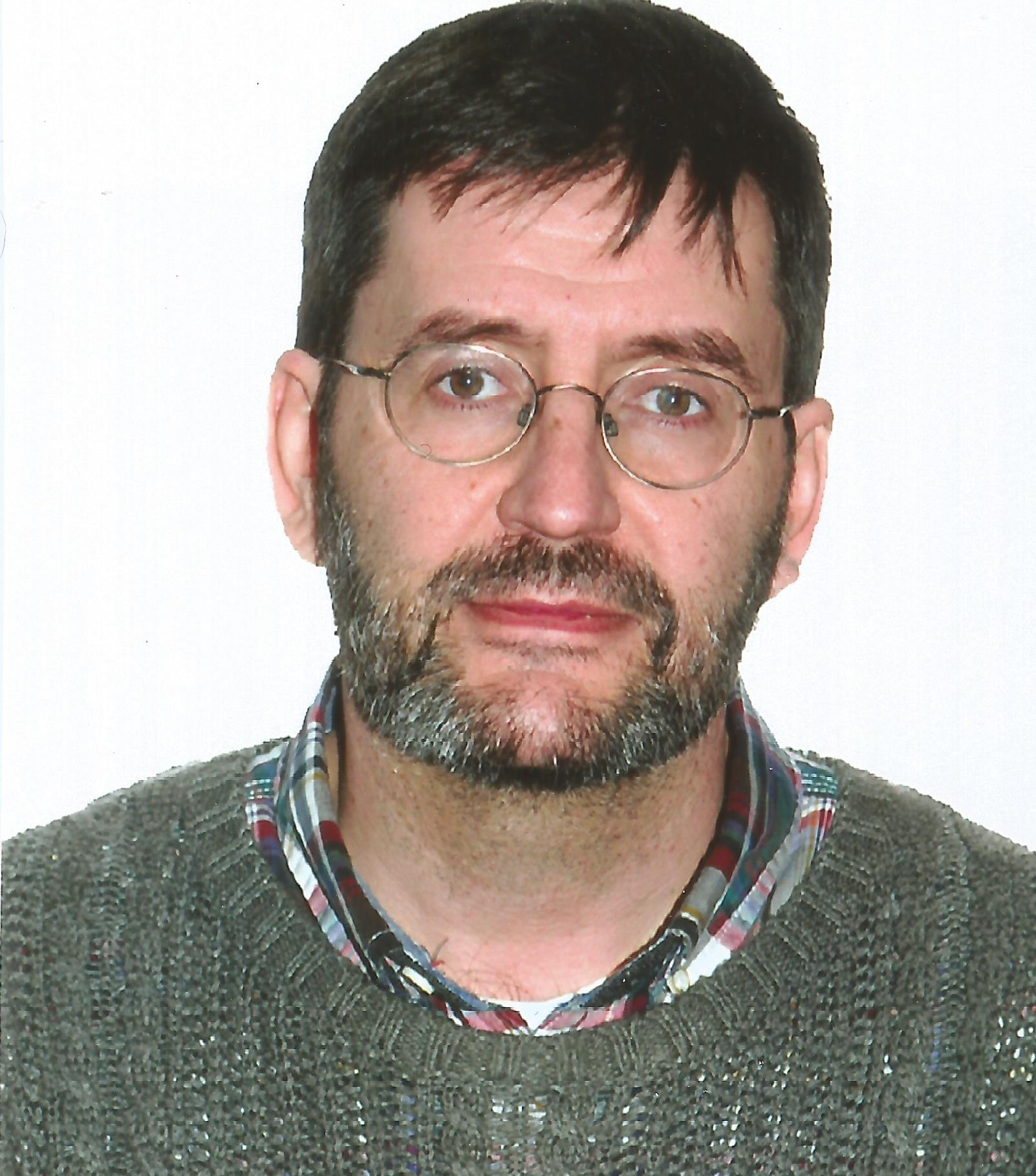
- Speaker: Prof. Francesc Perez-Murano;
Francesc Perez-Murano is CSIC research professor at the Institute of Microelectronics of Barcelona. His research activity has been centered in the development novel nanofabrication methods for nanoelectronics and nanomechanical devices, and in particular nanolithography. He has performed pioneering contributions to the field of CMOS-NEMS, including the monolithic integration of nanomechanical resonators with CMOS circuits, a pioneering work at that time. The activity has evolved from integrating silicon cantilevers up to, recently (2022) the demonstration of integrating SETs with ‘in-house’ CMOS technology.
Presently, he is participating in several international initiatives to advance in the manufacturing of semiconductor quantum devices, and he coordinates the manufacturing pillar of the CSIC quantum technologies platform, the quantum ecosystem created by CSIC to advance the field of quantum technologies, fostering training, research and innovation.
- Affiliation: Institute of Microelectronics of Barcelona (IMB-CNM, CSIC), Campus UAB. Bellaterra. Spain
- Title: "Nanofabrication contributions to the future of integrated circuits: ultimate power consumption and quantum computing"
- Abstract: The dimensions of semiconductor integrated
circuit devices continue to shrink, as dictated by Moore's law, to offer better
performance and lower power consumption. Soon, the most advanced technologies,
fueled by the enormous data processing needs of artificial intelligence, will
enter the sub-nanometer nodes, which implies great difficulties in
manufacturing. On the other hand, these technologies can be used to exploit
quantum phenomena and thus contribute to the development of practical quantum
technology. In this presentation, I
will show how new nanofabrication methods are being studied for their
introduction in IC fabrication, based on bottom-up concepts such as directed
self-assembly and single dopant incorporation, which, in turn enable the
realization of single electron devices.
Teacher: J. Brugger
Lecture on Nanopatterning
- scanning probes con't and lithography using them
- nanoimprint lithography
- soft-lithography
- stencil lithography
- self-assembly and DSA (directed self assembly)
- general Q&A
Micro-530 final workshop
Schedule:
|
Start Time |
Group |
Topic |
|
08:15 |
L |
Quantum dots I |
|
08:30 |
K |
Nanoelectronics |
|
08:45 |
B |
Nanofabrication |
|
09:00 |
I |
Nanomechanics |
|
09:15 |
G |
Quantum dots II |
|
09:30 |
Break |
|
|
09:45 |
E |
Nanomedicine II |
|
10:00 |
D |
Nanophotonics I |
|
10:15 |
C |
Carbon nanotubes |
|
10:30 |
J |
Nanomedicine I |
|
10:45 |
A |
Nanophotonics II |
- Student groups present and discuss their research paper.
- Attendance of all group members and contribution is expected. If you have to be excused, please send an email to teacher.
- Prepare slides to upload on MOODLE (max 7-8 slides)
Presentation content (15 min max):
- Remind topic / Review paper (1 min)
- Present technical details from your chosen research paper (6 min)
- Show possible relation to the Micro-530 course part (theory, applied, fabrication) (2 min)
- Highlight what you learned by reading the paper(s), something that you liked, or disliked, something that you think the class should remember as a take away message. Just one key aspect item is sufficient. (2 min)
- From the quiz questions that your group composed
earlier, choose 1-3 questions, show them to the class, ask real-time answer, and
then moderate the answer depending on the class knowledge. (2 min)
paper collection
- There's Plenty of Room at the Bottom (URL)
- Nanomanufacturing: a perspective (File)
- First piezo-resistive AFM cantilever paper by Tortonese et al (1991) (File)
- True atomic resolution in AFM (File)
- IEEE article on Chip Shortage (URL)
- IEEE Spectrum (URL)
- IEEE IRDS on lithography (File)