Statistical signal and data processing through applications
COM-500
Overview
- Solving interesting problems arising in attracting applications
- Preparing signals and data to be fed to communication and machine learning algorithms
Content
1. Fundamentals of Statistical Signal Processing :
Signals and systems in the deterministic and stochastic case.
2. Methods and algorithms :
Parametric and non-parametric signal models (wide sense stationary, Gaussian, Markovian, auto regressive and white noise signals); Linear prediction and estimation (orthogonality principle and Wiener filter); Maximum likehood estimation and Bayesian a priori.
3. Statistical Signal Processing Tools for Spread Spectrum Wireless Transmissions :
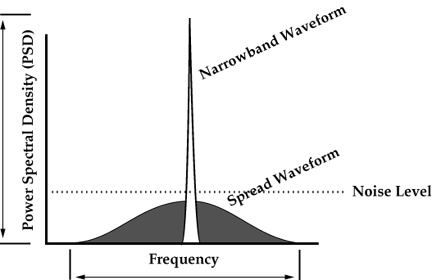
Coding and decoding of information using position of pulses (annihilating filter approach); Avoiding interference with GPS (spectral mask and periodogram estimation); Spectrum estimation for classical radio transmissions (estimating frequencies of a harmonic signal).
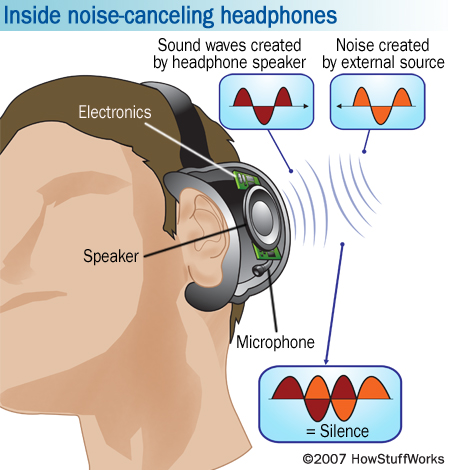
4. Statistical Signal Processing Tools for the Analysis of Neurobiological Signals :
Identification of spikes (correlation-based methods); Characterization of multiple state neurons (Markovian models and maximum likelihood estimation); Classifying firing rates of neuron (Mixture models and the EM algorithm).
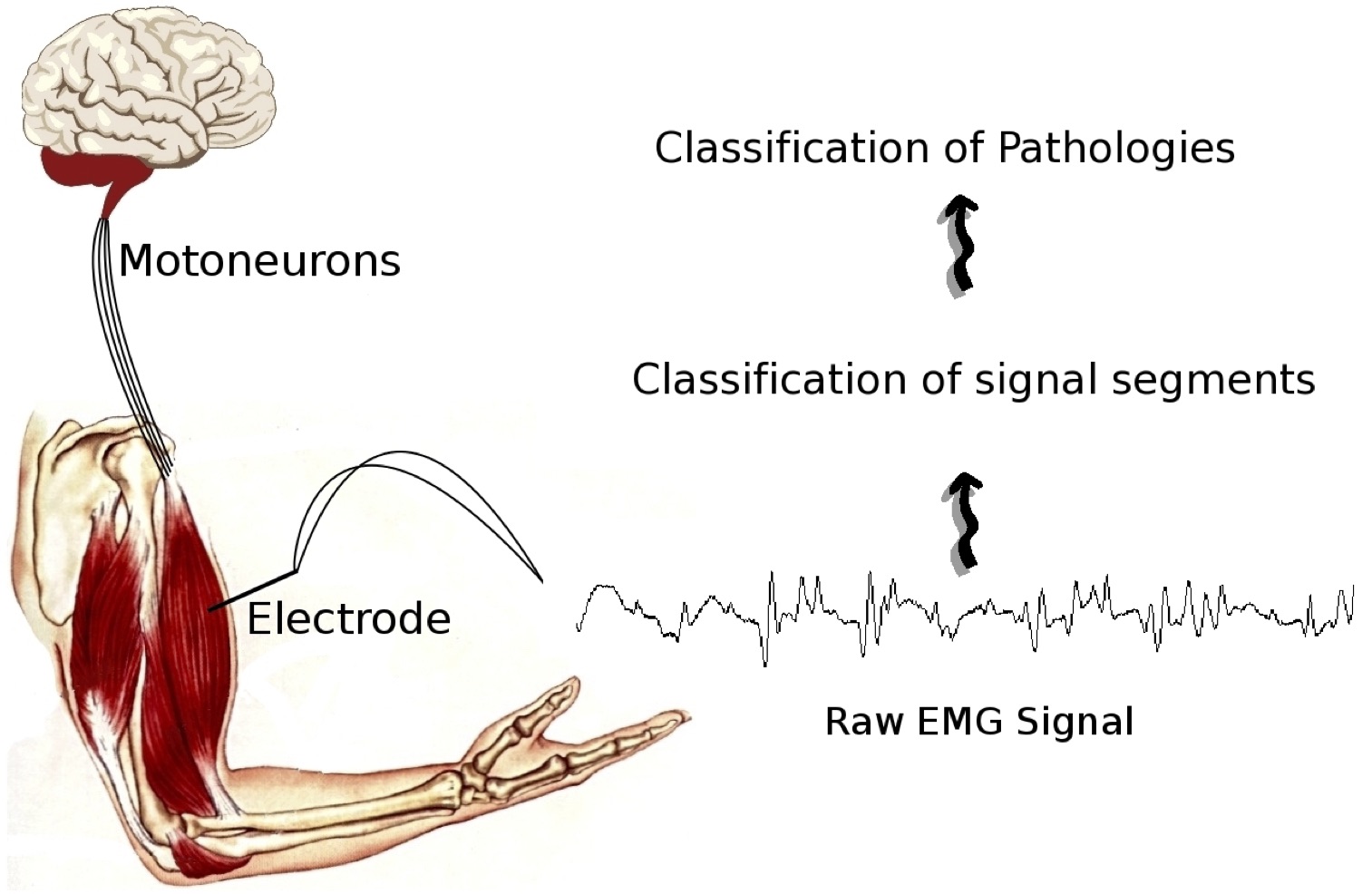
5. Statistical Signal Processing Tools for Echo Cancellation
Adaptively removing noise in communication or audio systems.Lectures & Exercise Sessions
Lectures: Thursday, 14h15 - 17h00, BC04. Exercises: Friday, 11h15 - 13h00, BC04.
Homeworks can be found on this site, in the resource section (see below). Homework sessions will focus on what has previously been done in the
course. The topics will be explained in more detail with practical examples and exercises which help in both understanding the subject and preparing for the final exam. Students will be given an opportunity to proactively shape
the contents of these sessions, i.e. ask for additional explanations of a particular topic, more exam-related exercises etc.
Lecturer
Andrea Ridolfi
Telephone: +41 79 790 79 96
E-Mail: andrea.ridolfi@epfl.ch
Assistant
Salim NajibE-Mail: salim.najib@epfl.ch
Evaluation
Midterm (20%), Mini-project (20%), Final exam (60%)
Please read carefully the section concerning the mini project!
Please notice that for the midterm and the final the only allowed document is a cheatsheet that will provided to you during the course.
Bibliography
The slides presented in class and distributed on Moodle completely cover the contents of the course. The following books provide further details on specific topics presented in class, as well as on related topic.
Background books
- P. Prandoni, Signal Processing for Communications, EPFL Press
- A.V. Oppenheim, R.W. Schafer, Discrete Time Signal Processing, Prentice Hall, 1989
- B. Porat, A Course in Digital Signal Processing, John Wiley & Sons,1997
- A. Yger, Theorie et analyse du signal: Cours et initiation via Matlab et Scilab, Ellipses.
- C.T. Chen, Digital Signal Processing, Oxford University Press
- P. Thiran, Stochastic models for communication systems (ask the teachers for the password), lecture notes, 2005
- D. P. Bertsekas, J. N. Tsitsiklis, Introduction to Probability, Athena Scientific, 2002 (excellent book on probability)
More advanced books
- L. Debnath and P. Mikusinski, Introduction to Hilbert Spaces with Applications, Springer-Verlag, 1988.
- A.N. Shiryaev, Probability, Springer-Verlag, 2nd edition, 1996.
- S.M. Ross, Introduction to Probability Models, Third edition, 1985.
- P. Bremaud, An Introduction to Probabilistic Modeling, Springer-Verlag, 1988.
- P. Bremaud, Markov Chains, Springer-Verlag, 1999.
- P. Bremaud, Mathematical Principles of Signal Processing, Springer-Verlag, 2002.
- S.M. Ross, Stochastic Processes, John Wiley, 1983.
- B. Porat, Digital Processing of Random Signals, Prentice Hall,1994.
- P.M. Clarkson, Optimal and Adaptive Signal Processing, CRC Press, 1993.
- P. Stoïca and R. Moses, Introduction to Spectral Analysis, Prentice-Hall, 1997.
- M. Vetterli and J. Kovacevic, Wavelets and Subband Coding, Prentice-Hall, 1995.
- S. Mallat, A Wavelet Tour of Signal Processing, Elsevier, 2008.
- G. McLachlan, D. Peel, Finite Mixture Models, Wiley, 2000.
- Midterm date: Thursday 17 April 2025 (duration 1h)... (Text and media area)
- Questions concerning the Theory (Forum)
- Questions concerning the Exercises (Forum)
- Exercise book (paper & pencil) (File)
- Advanced Material (File)
- MediaSpace channel of this year and previous year's lectures (URL)
- Tube switch channel of 2021 lectures (URL)
- A nice video about the learning process (URL)
- Cheat Sheet (File)
Week 1: Fundamentals of SSP
- Lecture session: (Text and media area)
- Fundamentals of SSP (UPDATED) (File)
- Fourier and Z transforms (supplementary slides) (File)
- Hilbert Spaces (supplementary slides) (File)
- Numerical Examples: Sampling (Folder)
- Exercise session: (Text and media area)
- Handout 1 (File)
- Solutions of Exercise Session 1 (File)
- Stationarity Notebook (File)
- Stationarity Notebook - solution (File)
Week 2: Fundamentals of SSP & Models and Methods
- Lecture session: (Text and media area)
- Anonymous Feedback 01 (Feedback)
- Numerical Examples: Correlation (Folder)
- Exercise session: (Text and media area)
- Handout 2 (File)
- Solutions of Handout 2 (File)
Week 3: Models and Methods
- Lecture session: (Text and media area)
- Models and Methods (UPDATED) (File)
- Numerical Examples: Auto Regressive, Markov Chain (Folder)
- Exercise session: (Text and media area)
- Handout 3 (File)
- Solutions of Homework 3 (File)
Week 4: Models and Methods
- Lecture session: (Text and media area)
- Anonymous Feedback 02 (Feedback)
- SSDP Tools for Wireless Communications (File)
- Tablet Notes (File)
- Numerical Example: Periodogram Resolution (File)
- Anonymous Feedback 03 (Feedback)
- Exercise session: (Text and media area)
- Handout 4 (File)
- Solutions of Handout 4 (File)
Week 5: Review
- Lecture session: (Text and media area)
- LoRa CHIRP Modulation (Video) URL (URL)
- Exercise session: no new handout this week (Text and media area)
Week 6: SSDP tools for wireless transmissions
- Lecture session: (Text and media area)
- Heart Rate Variability Article (URL)
- "AR identification and spectral estimate applied to the RR interval measurements". F Bartoli, G Baselli, S Cerutti. (File)
- RR signal (csv) (File)
- ECG signal (File)
- Numerical Example: Spectral estimation & Heart Rate Variability (File)
- Numerical Example: MUSIC algorithm (File)
- Exercise session: (Text and media area)
- Handout 5 (File)
- Solutions of Handout 5 (File)
Week 7: SSDP tools for Neurobiological Spike Processing
- Cheatsheet (File)
- Mock Midterm Exam with Solutions (File)
- Lecture session: (Text and media area)
- SSP Tools for Neurobiological Signals (File)
- Numerical Example: EM GMM 2D (File)
- Exercise session (Text and media area)
- Review_3.csv (File)
- Handout 6 (File)
- Solutions of Handout 6 (File)
Week 8: SSDP tools for neurobiological signal processing
- Lecture session: (Text and media area)
- Generating data from 2 classes (File)
- Exercise session: (Text and media area)
- Markov Chain Notebook (solution) (File)
- Markov Chain Notebook (File)
- Handout 7 (File)
- Solutions 7 (File)
- Matlab methods (File)
- Matlab solution (File)
Week 9: SSDP tools for neurobiological signal processing
- MIDTERM examYou have 1h time to do the midterm, an... (Text and media area)
- Lecture session: (Text and media area)
- EM for Mixture of Gaussian Distributions (File)
- Numerical Example Mixture + EM (File)
- Assignment: (Text and media area)
- Numerical Exercise Data Classification (slide #43) (Text and media area)
- Compete the Numerical Exercise PCA (slide #63) &nb... (Text and media area)
- Exercise session: (Text and media area)
- Handout 8 (File)
- Solution 8 (File)
Holidays!!!! Easter break.

Week 10: SSDP tools for neurobiological signal processing
- Lecture session: (Text and media area)
- dataPCA.mat (data for the numerical example about PCA) (File)
- Exercise session (Text and media area)
- Handout 9 (File)
- Solution 9 (File)
Week 11: SSDP tools for Echo Cancellation
- Lecture session: (Text and media area)
- SSDP Tools for Echo Cancellation (File)
- Echo Cancellation Demo (courtesy of Paolo Prandoni) (File)
- Echo Cancellation Telco Demo (File)
- Exercise session: (Text and media area)
- Handout 10 (File)
- Solution 10 (File)
Week 13: SSDP tools for Echo Cancellation / Review
- Lecture session: (Text and media area)
- Anonymous Feedback 04 (Feedback)
- Numerical Example PCA (File)
- Exercise session: (Text and media area)
- Handout 11 (File)
- Solution 11 (File)
- Anonymous Feedback 05 - Pre review session (Feedback)
- Lecture session: Review Session (Text and media area)
- Exercise session: (Text and media area)
Week 14: Presentation of the Mini Projects (Friday May 30)
Each group will have a time slot of 15 minutes. The goal of the presentation is to:
- Present the theoretical aspect of the mini-project, i.e., give a mini lesson on the tool studied (using slides & the projector).
- Present a demo;
- Answer questions of the class (reserve up to 5 minutes fo that).
Before 14h, each group should submit
- The slides of the mini lesson.
- The files/code of the demo
- A user manual of the demo describing what it does and how to run it.
Week 12: Ascension Day
Mini-Projects
The goals of the mini project are:
- Implement one (or more) of the tools seen in class;
- Explore more advanced / specific tools related to the tools seen in class, via scientific literature and numerical implementation;
- Present the tools to the class with a demo and a performance comparison.
Such goals are achieved via specific tasks:
- Work as a team (everyone must contribute and be aware of every detail of the accomplished work);
- Implement the assigned tool seen in class (Python or Matlab);
- Test it on simulated and real data (real data will be provided);
- Submit a report on the test of the tool on simulated and real data (Assignment #1);
- Explore other advanced tools, not presented in class, outperforming the assigned tool (start from the suggested literature, and pursue the research of information on additional papers & books);
- Submit a report on the advanced tools (Assignment #2);
- Implement the new tools (Python or Matlab);
- Prepare a demo (on simulated and real data) comparing the tools;
- Prepare about 5-10 slides to present to your colleagues the tools, their comparison, a demo, and your conclusions.
- Submit the demo (with instructions), the presentation, and a short report (min 6 pages, max 10 page) on the mini-project (Assignment #3);
Like in every Research or Research & Development project, you have access to what has been already done by your predecessors. You are expect to understand what your predecessor has done and improve it by bringing some "innovation" (better solution, better explanation, better demo).
You will be evaluated on these tasks (and assignment), on the quality of problem solutions, on the quality of your implementation, on the quality of the "innovation", on the quality of the presented demo & results.
Notice for the students re-taking the course
As well as re-taking the final exam, you are requested to re-do a mini-project. In addition, the mini-project have to be of different topic than the one you have previously done.
- Forum to discuss mini-projects and to create groups (Forum)
- Mini-project goals, tasks, and assignments (File)
- Guidelines for writing project/lab reports (File)
- Mini-project choice (Group choice)
- Use the links below to submit your work/document/c... (Text and media area)
- Mini-project topics (Text and media area)
- Music for DOA (Text and media area)
- MUSIC for Direction of Arrival (File)
- Last year's submission (File)
- Music & Co. for Line Spectrum Estimation (Text and media area)
- MUSIC & Co. (File)
- Last year's submission (File)
- Annihilating Filter for Spectral Estimation (Text and media area)
- Improved Annihilating Filter (File)
- Data (noisy bass) (File)
- Data (Clean bass) (File)
- Last year's submission (File)
- Periodogram for Spectral Estimation (Text and media area)
- Periodogram & Co. (File)
- Adaptive Filter (Text and media area)
- Adaptive Filtering (File)
- Instructions for Noise Cancelling Data (File)
- Data (noise and noisy signal) (File)
- Last year's submission (File)
- PCA & Eigenfaces (Text and media area)
- PCA & Eigenfaces (File)
- Last year's submission (File)
- Lomb-Scargle Periodogram (Text and media area)
- Lomb-Scargle Periodogram (File)
- Reference Paper (File)
- Previous years' submission (File)
- Radio-Astronomy Source Localization (Text and media area)
- Radio-Astronomy Source Localization (File)
- Radio-Astronomy Real Data (File)
- Last year's submission (File)
- Throughput Optimization in 5G Networks (Text and media area)
- Throughput Optimization for 5G Networks (File)
- Throughput Optimization Real Data (File)
- Last year's submission (File)
- Wiener filtering for lensless imaging (Text and media area)
- Wiener filtering for lensless imaging (File)
- Example Data (harmonic signal, clean and noisy) (Text and media area)
- Data (Noisy bass) (File)
- Data (clean bass) (File)
- Example Data specifically for Direction of Arrival... (Text and media area)
- Instructions for DOA project (Jupyter Notebook) (File)
- Instructions for DOA project (html) (File)
- Test data for DOA (correlated and uncorrelated) (File)
Final Exam
Exams (previous years)
- Final Exams (Text and media area)
- Final Exam 2024 (File)
- Final Exam 2023 (File)
- Final Exam 2022 with solution (File)
- Final Exam 2021 (File)
- Final Exam 2020 (File)
- Final Exam 2019 with solutions (File)
- Final Exam 2018 with solutions (updated 06/2021) (File)
- Final exam 2017 with solutions (File)
- Final exam 2016 with solutions (File)
- Final exam 2015 with solutions (File)
- Final Exam 2014 (File)
- Final exam 2012 with solutions (updated 06/2021) (File)
- Midterm Exams (Text and media area)
- Midterm Exam 2023 (File)
- Midterm Exam 2025 (File)
- Midterm Exam 2022 with solutions (File)
- Midterm exam 2017 (File)
- Midterm Exam 2016 (File)
- Midterm Exam 2015 with solutions (partial) (File)
- Midterm Exam 2014 with solutions (File)
- Midterm Exam 2013 with solutions (File)
- Midterm Exam 2012 with solutions (File)
- Midterm Exam 2011 (File)